**We are looking for a single or pair to close out our 2026 season. We are also looking for up to four people to start our 2027 season. We have a great mix of work waiting for you! **
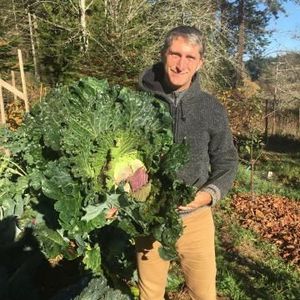
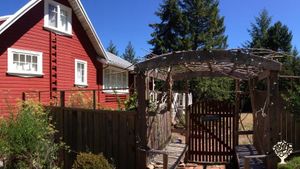
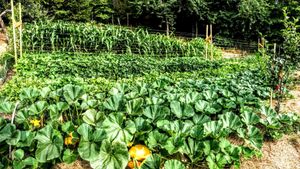
My partner Brian and I have owned our century-old farmhouse for 13 years, and moved here in 2018. Our two-acre (one hectare) parcel overlooks a lovely valley, and we grow veggies on about 3000 sq. ft. (300 sq. m) of land. We also have dozens of fruit, nut and berry trees and bushes.
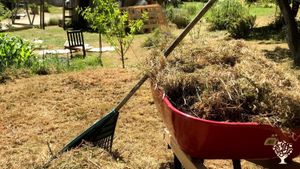
WWOOFing work in the spring focusses on getting garden beds ready for planting, planting seeds and seedlings, weeding, fertilizing, farm maintenance, fencing, greenhouse maintenance, and light construction projects. There is also work to do in our berry garden and in the orchard, maintaining the trees, fertilizing -- a nice variety. In the summer the work focuses on garden maintenance, harvest, weeding, processing, along usually some construction, carpentry, or painting projects. In the fall, the theme is harvest, processing, and putting the gardens to bed for the winter which can include mulching with straw, some final weeding, taking down summer infrastructure like bean trellises, and getting the greenhouse and hoophouses ready and planted for winter.
We prefer WWOOFers who are truly interested in the exchange and *reciprocity* elements of WWOOFing. That means curiosity both ways, exchanging views around the supper table, and a real interest in life on the land. It also means not folks looking for a farm vacation or doing the bare minimum for food and shelter. You need to have an appetite to learn, to work hard for the time you need to work in exchange for our commitment to giving you high-quality food and shelter. We say these things after 7 years of experience hosting and having a wealth of rich experience with wonderful people, and sometimes not when the time feels transactional. So this is us wanting to be clear about what kind of energy we want in our home since we will live together while you are with us. The reviews we have received demonstrate that we definitely hold up our end of the bargain about reciprocity. If you want to understand what we truly mean by this word, read Native American Robin Wall Kimmerer's beautiful book, Braiding Sweetgrass which has been a huge influence for both of us. I asked ChatGPT to give me a summary, so that is at the end of our loooooong profile. :-)
We have two guest bedrooms in our house, one with a queen bed and one with two twin beds. We can accommodate either a couple or two friends, but seasonal needs are usually stated at the top of this description. We provide dinners and often lunches. We ask WWOOFers to make their own breakfasts and sometimes to prepare their own lunches. There is always plenty of food for hungry WWOOFers to eat. We ask WWOOFers before arrival about what they like to eat to ensure that they have the food they like for breakfast and lunch. Most of the food cooked is vegetarian. We have had many vegan WWOOFers and easily accommodate vegans. Our cooking gets great reviews and there is always more than enough. We are also comfortable complementing vegetarian dishes with chicken or fish if WWOOFers desire that. Brian is vegetarian, and Bryan eats some chicken and fish. We ask WWOOFers to set the table and clean up after the meal. We have an exercise room in the basement, featuring a stationary bicycle, a rowing machine, an elliptical trainer, free weights, a yoga mat, and other exercise equipment, which WWOOFers are welcome to use.
While WWOOFers are with us, they often go for hikes on the island, and we are happy to drive WWOOFers to hiking locations. Bryan often takes WWOOFers on hikes or out kayaking. Bike and two e-bikes also available. During the summer there is opportunity for swimming in nearby lakes and in the ocean. We enjoy conversations with WWOOFers around the dinner table and appreciate the opportunity to learn about our WWOOFers while they learn about us and our lives.
We love our little island, which is full of super interesting people and amazing scenic beauty. This place is the envy of all of Canada and makes for a fulfilling WWOOFing experience!
Brian and I have been bringing much greater productivity and fertility to the land we steward. I have gardened since I was a child, and it has been a lifelong dream to have a place where I can cultivate food sustainably, fostering as much self-sufficiency as we can, and learning a lot along the way. We have planted a dozen more hazelnuts, along with walnuts, grapes, apples, pears, plums, blueberries, raspberries, strawberries, grapes, plums, currants, and elderflower. Our greenhouse has several citrus bushes including lemon, lime, grapefruit, and oranges of three different kinds. In summer I usually grow ginger and melons.
Our veggie plantings feature a lot of the usual plantings, with a focus on dry corn for flour (tortillas, etc.), squash, roots, and brassicas. Our growing climate in the Gulf Islands is the most benign in Canada.
Winter gardening -- involving late summer plantings -- greatly extends the season. In winter and early spring, we enjoy chard, potatoes, turnips, beets, carrots and a range of brassicas including broccoli and cabbage.
Brian and I retired from our careers in public service in 2018. Brian was an elementary school teacher for 29 years, and I had a career in electricity conservation program design and co-operative renewable energy development. Brian is also a poet, with several publications to his credit -- see briandaypoetry.com. We are both engaged with our community. I am the chair of Transition Salt Spring (transitionsaltspring.com), the main group on the island working on climate action. Brian is involved with Salt Spring's active writing community and in delivering storytelling in our schools.
In summers we swim almost every day at one of a number of swimming lakes – our favourite is only 8 minutes away by bike, and is also clothing optional -- and others are a short car ride away. There are even sun-warmed ocean spots to swim that are glorious in summer and many freezing ones I am trying to master! We own two sea kayaks and love to explore some of the surrounding ocean and small islands surrounding Salt Spring. We regularly see seals and sea lions, and the waters are good for crabbing. Both Brian and I are keenly engaged with and concerned about the world around us -- politically, socially, and, of course, environmentally.
Bryan Young and ChatGPT Summary of Robin Wall Kimmerer's use of the word "reciprocity":
In "Braiding Sweetgrass," Kimmerer explores the concept of reciprocity as a fundamental principle of Indigenous wisdom and ecological/community sustainability. Reciprocity, as she describes it, is the idea of giving and receiving in equal measure within the world. That world is the 'natural' world which actually includes human and non-human beings. It's about understanding our relationship with the land *and* one another while acknowledging that we are not just 'takers' but also 'givers'. This creates what the Briyans call a 'circle of reciprocity, which is like the free flow of blood through an organism. Take that metaphor to any setting, like our island, or even our household when WWOOFers are here with us.
Kimmerer emphasizes the importance of reciprocity in our interactions with the Earth and each other, advocating for a more respectful and reciprocal relationship with the human and non-human worlds which are one. This involves not only taking what we need from our villages and our natural worlds but also giving back and caring for the land in return.
By practicing reciprocity, Kimmerer argues, we can foster a deeper sense of connection and responsibility towards each other and our beautiful planet, leading to more sustainable and harmonious ways of living. She shares stories and examples of Indigenous practices that embody reciprocity, such as offering gratitude, taking only what is needed, and participating in rituals that honour the interconnectedness of all living beings.
Overall, reciprocity, as understood in "Braiding Sweetgrass," is about recognizing the inherent value of all life forms and living in harmony with the natural world rather than exploiting it for our own gain.
Read more
Learning opportunities
Vegetable farming
Fruit or nut farming
Beekeeping
Seed saving or production
Vegetable or fruit preservation
Bakery
Food justice / sovereignty
Methods or systems
Holistic management
No-till farming
Permaculture
Mentoring opportunities
LGBTQ+-operated
Host type
Self-sufficiency property
1
Hectares
|
2.5
Acres